Environmental
Climate Change Response

Climate change response is increasingly recognized as a critical global challenge. In Korea, related regulations are being strengthened, including the enactment of the Framework Act on Carbon Neutrality and Green Growth. Seegene identifies climate-related risks and opportunities through TCFD-based scenario analysis and has established a long-term management system informed by the results.
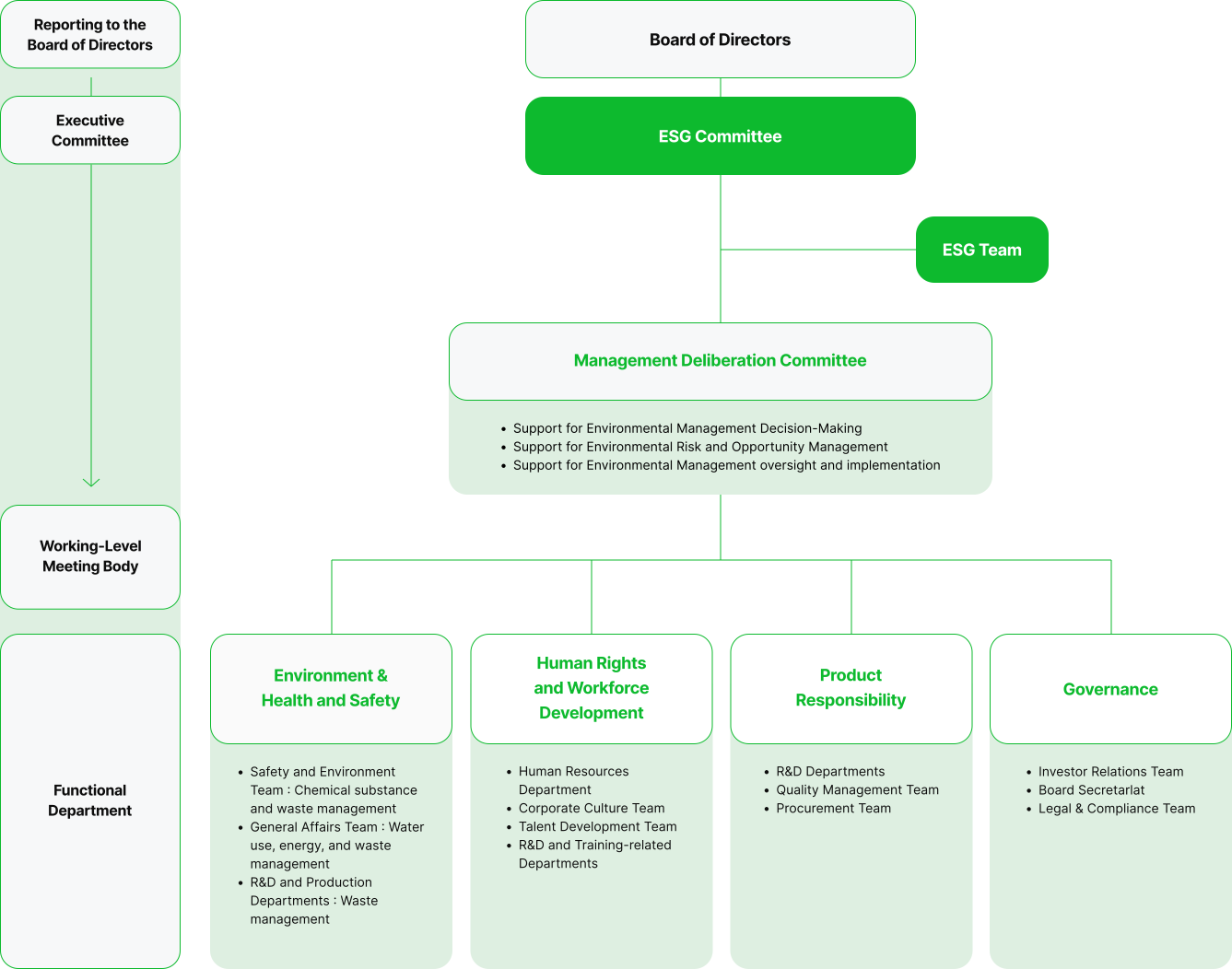
Seegene acknowledges that climate change significantly affects its management strategies and overall operations. To ensure effective governance in climate response, the company has established and operates the ESG Committee under the Board of Directors. This committee oversees Seegene’s climate strategies and supervises the management of climate-related risks and opportunities.
In 2024, as part of its climate change response, establishing a dedicated environmental department and strengthening environmental management indicators were selected as key tasks and approved by the ESG Committee. The ESG Team is actively advancing climate-related initiatives in collaboration with relevant departments, thereby continuously strengthening Seegene’s overall climate response capabilities.
Environmental Management
Governance
Environmental
Management Goal
We establish our environmental management goals for sustainable development and continuously improve our management and assessment systems to achieve these goals.
Seegene Inc. (hereinafter referred to as ‘Seegene’) has set the following environmental goals to effectively engage in environmental management, taking into account its compliance obligations regarding environmental regulations, as well as organizational risks and opportunities that may have a significant environmental impact.

To attain the environmental goals stated above, we will establish a company-wide management system in consideration of environmental impacts and their life cycles. We will set short-, mid-, and long-term environmental goals, measure annual progress toward these goals, evaluate our performance, and reflect the results in identifying necessary improvements.
Environmental
Management Activities
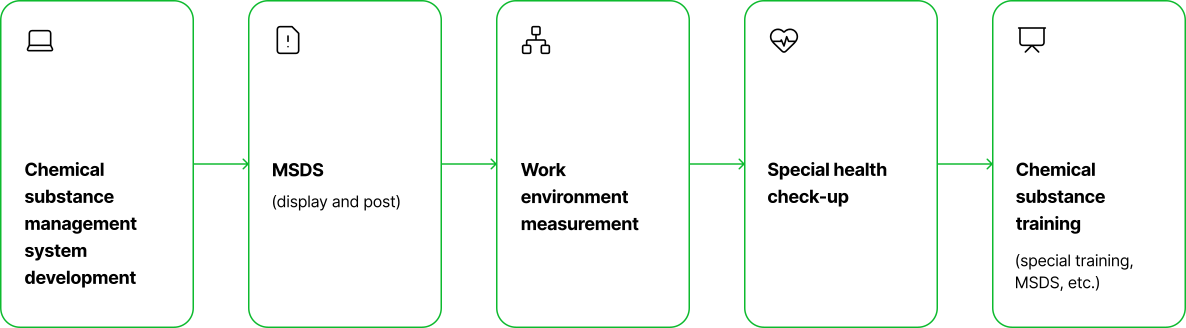
Seegene abides by laws and regulations concerning chemical substance management, including the Chemical Substances Control Act, the Occupational Safety and Health Act, and the Act on the Safety Control of Hazardous Substances. Leveraging GHS-compliant MSDSs, we perform risk assessments to review chemical substances for their hazards and risks. We also appoint lab safety managers to independently monitor chemical substances through daily inspections conducted year-round and systematically manage the equipment used at our research labs and manufacturing facilities.
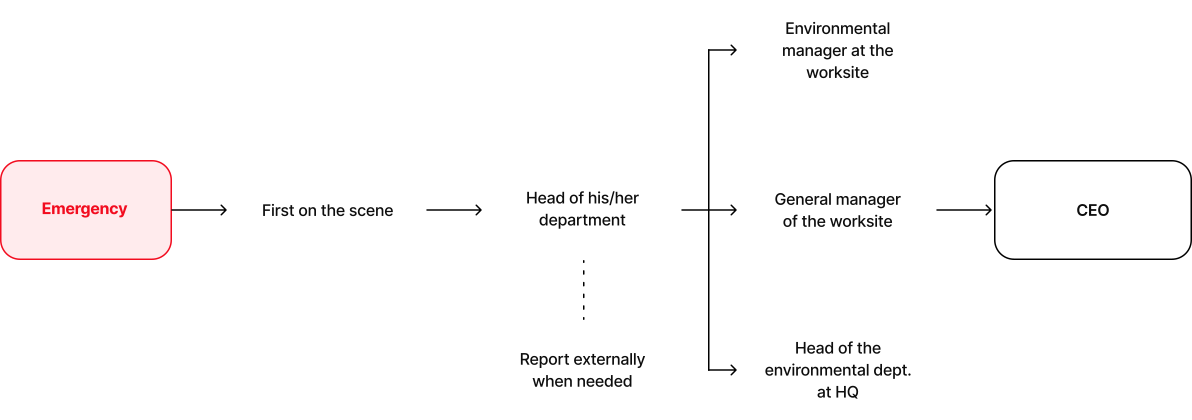
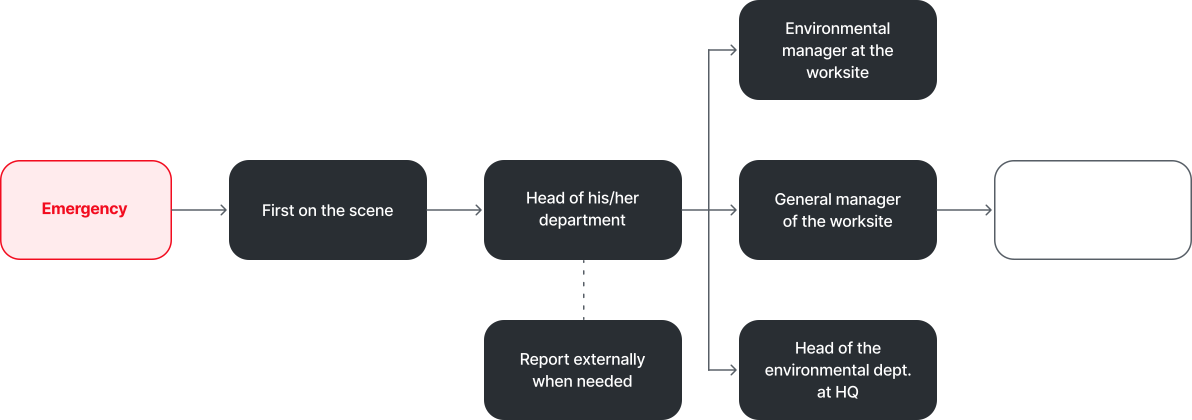
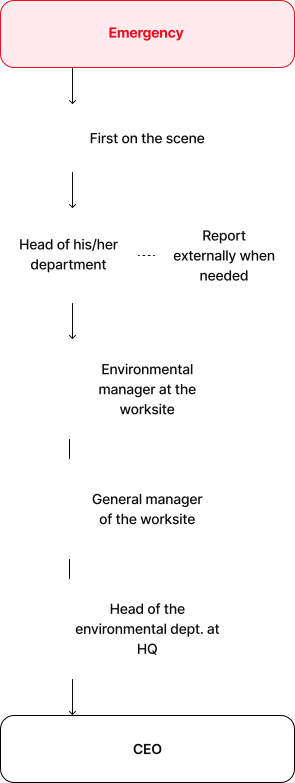
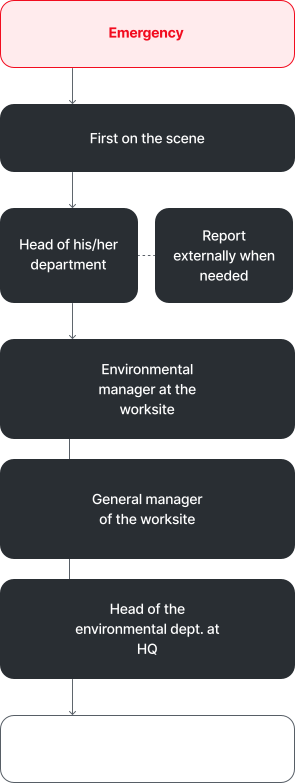
We regularly check worksite facilities and conduct accident response exercises to prevent potential accidents.
We develop scenarios to prepare for potential accidents, ensure that appropriate emergency equipment and protective gear are available, and conduct exercises based on established scenarios. Our accident prevention and response plans, including response scenarios, are reviewed and updated annually.
Resource Efficiency
Enhancement
In response to strengthening global regulations and policies, companies are required to transition toward a circular economy. Seegene is enhancing resource efficiency through activities such as resource recovery, waste management, and the development of recyclable packaging.
Waste Management
Seegene reduces plastic pallet waste by renting, using, retrieving, and re-renting pallets used for product movement, and engages in upcycling activities for waste plastics. We will continue efforts to promote waste reduction and resource circulation through various methods suited to our company and industry characteristics.
In June 2024, the waste management guidelines were revised to establish a system that enables company-wide management of all processes, including waste emission, storage, and consignment treatment. Through this revision, the system was organized to more clearly distinguish between designated and medical waste emissions, aiming to minimize environmental risks and comply with related laws.Waste Resource Circulation
Seegene reduces plastic pallet waste by renting, using, retrieving, and re-renting pallets used for product movement, and engages in upcycling activities for waste plastics. We will continue efforts to promote waste reduction and resource circulation through various methods suited to our company and industry characteristics.
Sustainable Packaging
As part of our commitment to realizing a circular economy, Seegene is continuously driving the development and application of sustainable packaging that is recyclable and minimizes environmental impact.
Seegene has achieved step-by-step advancements in its packaging solutions. Following the introduction of VIP packaging in 2023—which reduced volume by 13% compared to traditional PCM—the company has implemented an enhanced VIP model since early 2026, successfully reducing net weight by approximately 6kg per box.
In particular, in February 2026, Seegene fully implemented a next-generation logistics solution that delivers both economic efficiency and superior performance. The newly introduced packaging has been proven through independent certified testing to maintain temperatures below 4°C for up to 120 hours. This innovation has led to breakthrough logistics efficiency, including an 11% reduction in shipping costs and a 7% reduction in packaging procurement costs. These improvements make a substantial contribution to lowering greenhouse gas (GHG) emissions by reducing energy consumption and resource inputs throughout the logistics process.
Furthermore, we are accelerating the company-wide adoption of FSC (Forest Stewardship Council) certified materials for our product packaging. Seegene remains dedicated to strengthening its sustainable competitiveness by proactively managing carbon emission risks across the entire logistics cycle.Development of FSC Certified Transport Packaging Boxes
The EU, where Seegene's major customers are located, announced amendments to the Packaging and Packaging Waste Regulation (PPWR) in 2022, strengthening regulations on environmentally polluting materials such as expanded polystyrene (EPS). In response, Seegene proactively developed recyclable packaging boxes in 2022 and filed patent applications to address global policy changes. These transport packaging boxes are composed of FSC-certified or recyclable materials, using 12-layer cardboard boxes and recycled PE insulation to maintain product quality while ensuring stable deliveries. Notably, performance tests were conducted seven times in accordance with International Safe Transit Association (ISTA) 7D standards to verify packaging integrity under changes in composition and conditions.
Comment & Note
Quick link
Discover Seegene’s key achievements and breakthroughs shaping the future of diagnostics.

About Seegene
Learn who we are, what we stand for, and how we are building a healthier world.

Technology
Explore the proprietary technologies that deliver exceptional performance and accurate diagnostics.

Global Network
See how our international network of partners and subsidiaries brings diagnostic innovation to the world.